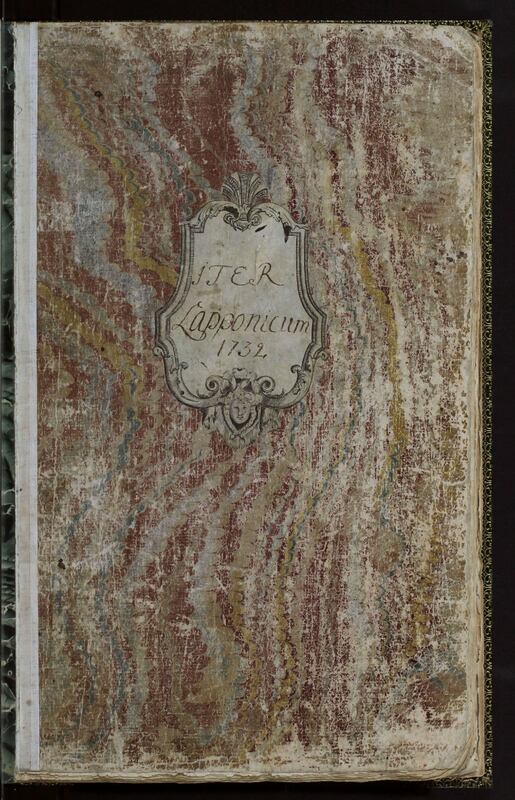
In the summer of 1732, the 25-year old medical student Carl Linnaeus undertook a journey to Northern Fennoscandia, which was funded by the Royal Scientific Society in Uppsala. During the journey, he produced a diary that detailed his observations and experiences. This was not a diary in the strict sense of the word, but rather compiled towards the end of the journey from earlier notes. Accordingly, it presents a mix of genres: first-person accounts — sometimes in the first person plural since Linnaeus was often accompanied by local guides — of interactions with settlers and the indigenous Sámi; third person descriptions, sticking to the "anthropological" present, of the nature and culture of Sápmi (Lapland) which were based on conversations Linnaeus had with clergy and schoolmasters who hosted him in colonial outposts like Lycksele and Kvikkjokk; and drafts for academic essays, for example answering the question why the Sámi reindeer herders "are so fleet at foot". The diary was originally stored in the form of loose leafs in a leather cover (which is also preserved in the Linnean Society's collections). Some time after his return to Uppsala, Linnaeus bound it in cardboard, and applied a decorative label which he inscribed with the title and the year of the journey. In 1784, the English naturalist James Edward Smith purchased the diary as part of Linnaeus's collections from the latter's widow Sara Elisabeth Moræa. It was Smith also who prepared an English translation, which was published as Lachesis lapponica; or A Tour in Lapland in 1811. It became a paragon of scientific travel writing in the nineteenth century.